
Bioluminescence at Los Arcos de Mismaloya: Flashes in the Darkness of Banderas Bay
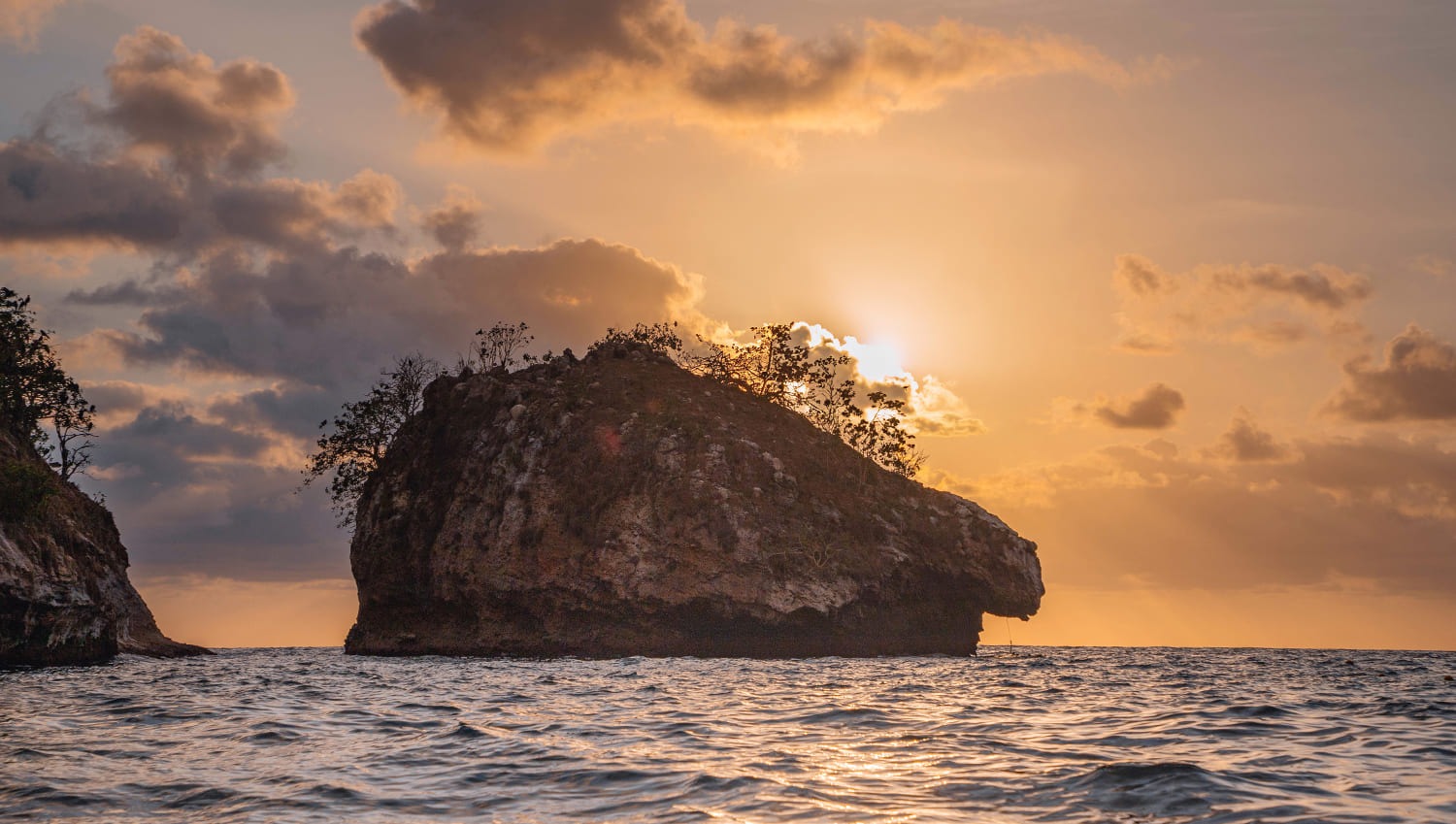
The panga’s motor breaks the afternoon quiet at Mismaloya Beach. The rush has been left behind; only one clear intention remains: to follow the transition from day to night from the sea. The vessel slowly pulls away from the shore as the silhouette of the mountain range begins to unfold, granting us a unique panoramic view from this area of the bay.
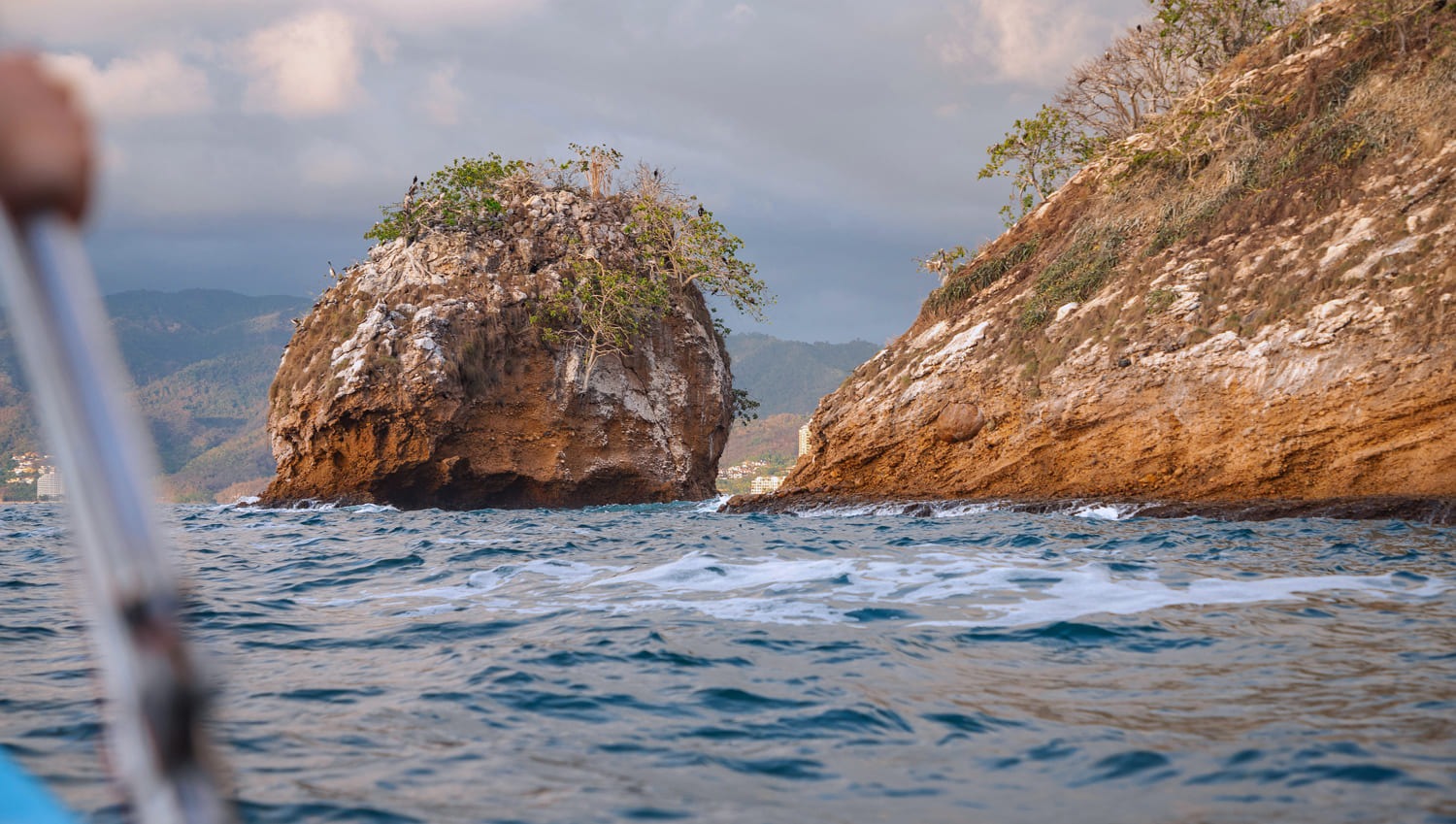
Just a few minutes later, the journey toward Los Arcos de Mismaloya serves as a first introduction to the site. As the coast stretches southward, the guides—natives of this very community—begin to narrate the landscape naturally. Mismaloya, they explain, comes from an ancient indigenous term meaning a “place to catch fish,” a definition that still seems to resonate in the daily activity of the area today. Amid historical facts and cultural references, the echo of cinema also appears: the filming of The Night of the Iguana, directed by John Huston in 1963, which projected this corner of the bay into the international imagination.
Moments later, the panga enters the perimeter of the Los Arcos de Mismaloya Marine National Park. The rock formations emerge as monumental silhouettes, eroded by time and inhabited by seabirds circling above the water. The guides point out the islands, the caves, the natural archways, and the stories that have grown around them: scientific accounts, local tales, and the inevitable layer of myth that accompanies every seascape.
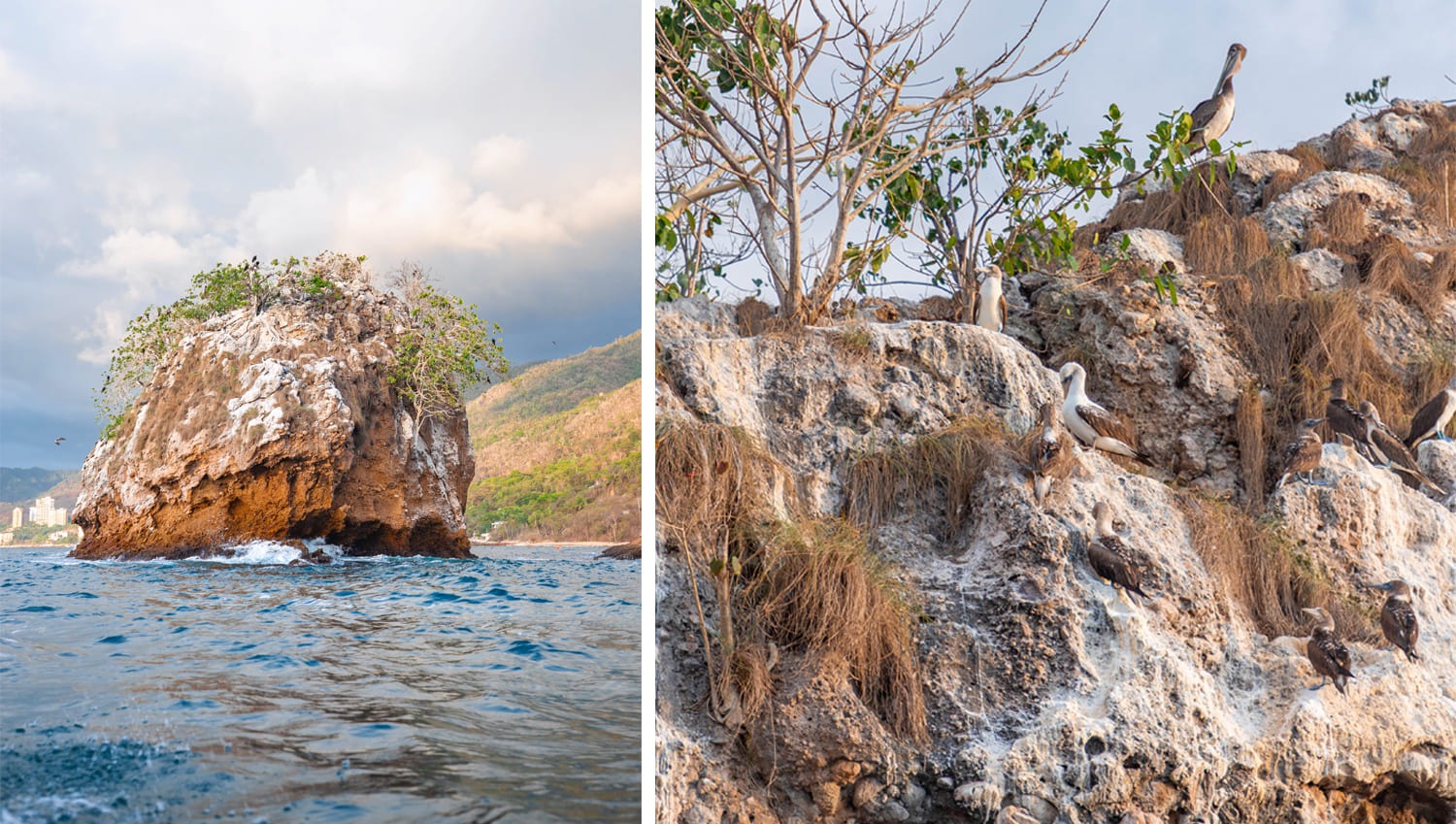
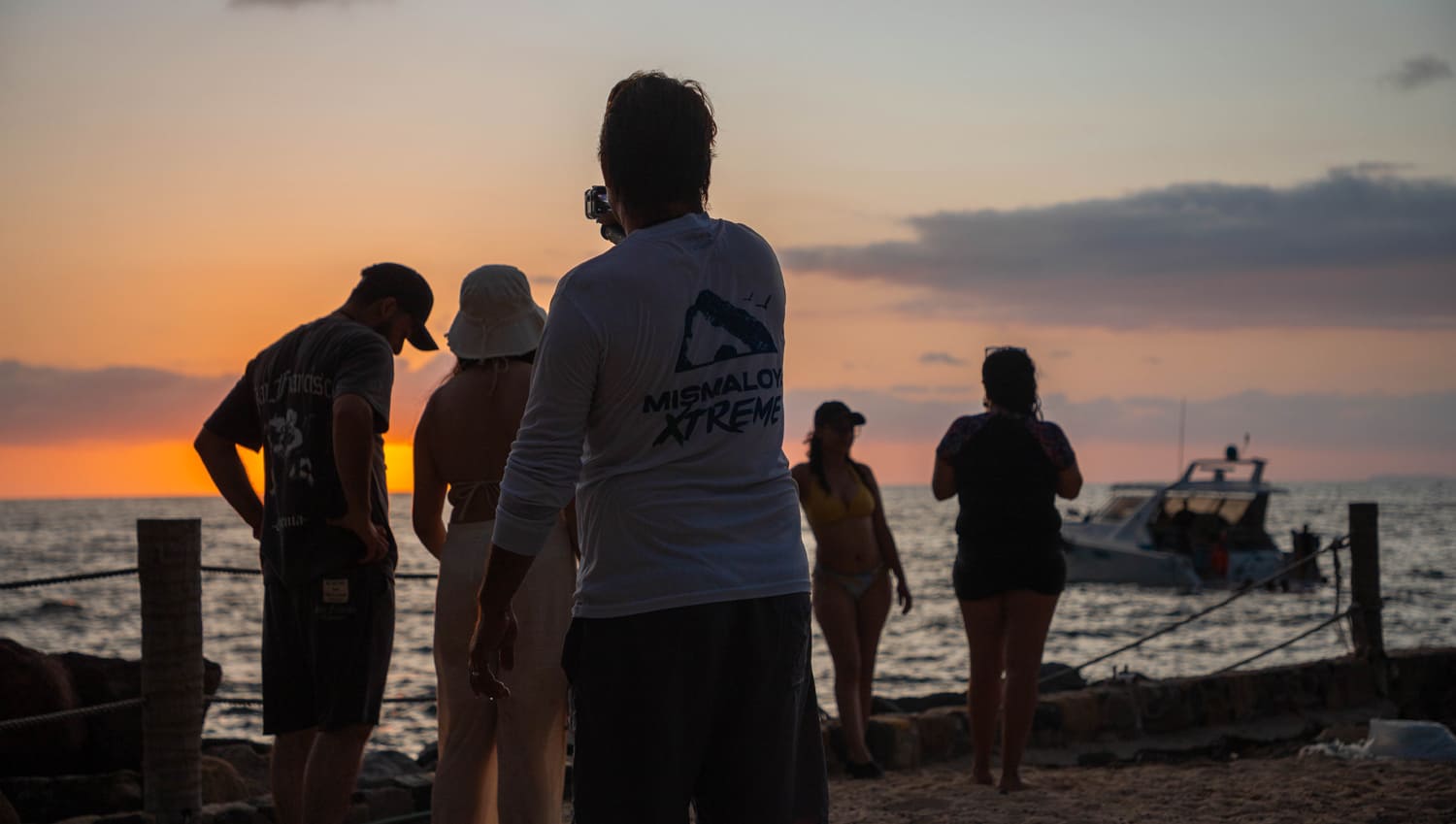
The tour continues without lingering for too long. The boat detours toward a nearby beach, where the dynamic shifts completely. The panga touches sand and the group steps off. Conversation blends with the sound of the waves as the sun sinks toward the horizon. The sunset here is not a frontal spectacle but an immersive one: the light spreads across the water, turning the surface into a shifting plane of warm tones and soft reflections.
When the sun finally disappears, the group boards the vessel once more. Darkness is no longer a transition, but a presence. The return toward Los Arcos now unfolds under a different logic: that of silence and anticipation.
Upon reaching the Main Arch (Arco Mayor), the visual reference of the day has vanished. What was once form is now shadow. It is here that the experience changes scale. The passengers put on life jackets and, one by one, enter the water. The sea is now a space that responds.
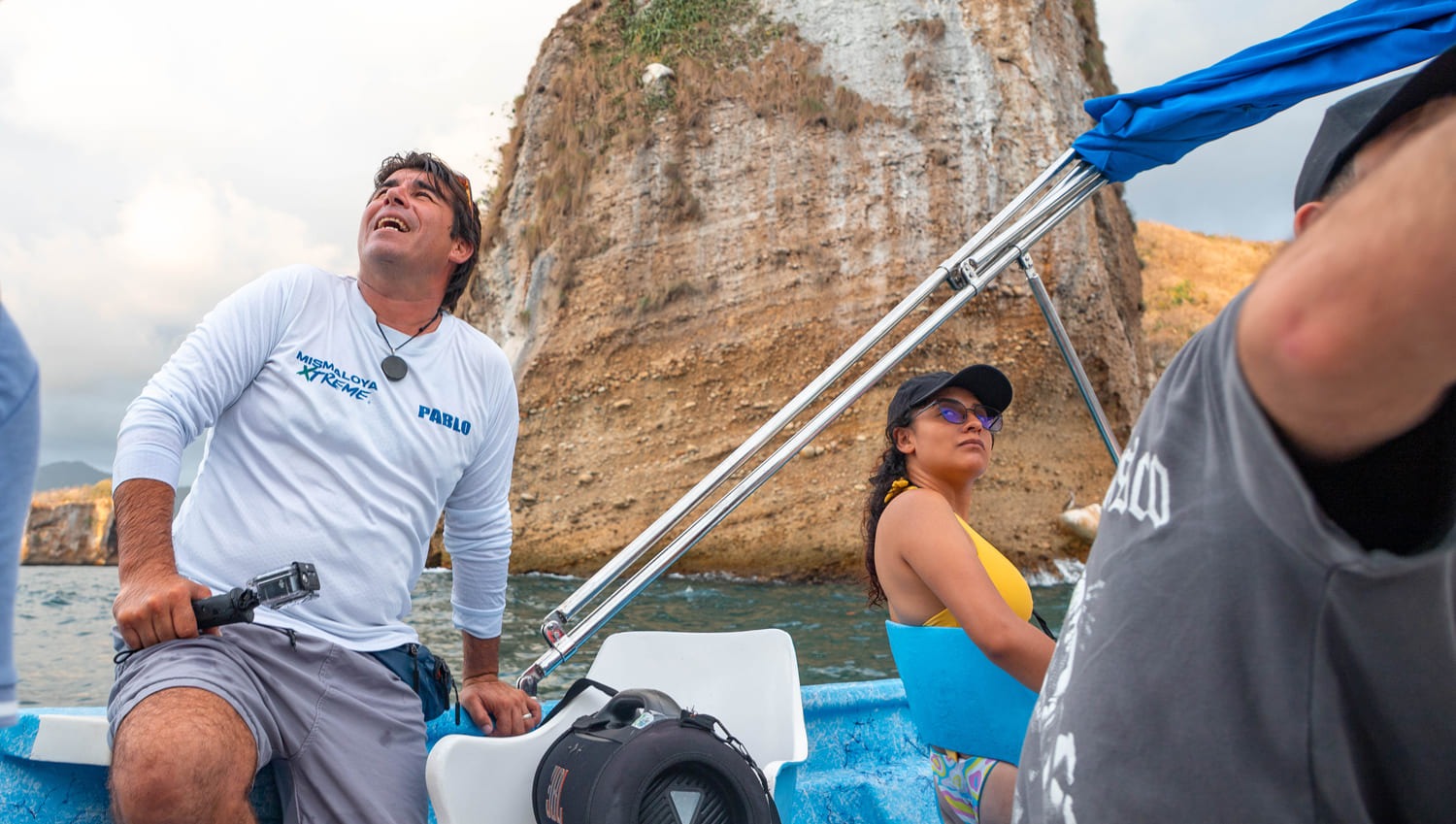
“There are nights when you don’t even need to get into the water to see the bioluminescence; the sea ignites it right on the surface,” explains Pablo, a guide with Mismaloya Xtreme. “But when you submerge yourself, you understand that the phenomenon isn’t in front of you—it is happening with you.”
The first contact is almost imperceptible. A movement of the arms, a small wake, a brief flash that could be mistaken for imagination. However, as your eyes adapt to the darkness, the water begins to reveal a different logic. Every stroke activates luminous trails; each bubble leaves an ephemeral footprint that slowly dissolves. The sea seems to respond in real time to human movement, as if the contact activated an invisible language.
Bioluminescence is a phenomenon produced by marine microorganisms (primarily dinoflagellates) that emit light as a result of an internal chemical reaction when the water is agitated. In areas with low light pollution, such as the immediate surroundings of Los Arcos, this reaction can be perceived with greater clarity, transforming the marine surface into a liquid constellation.
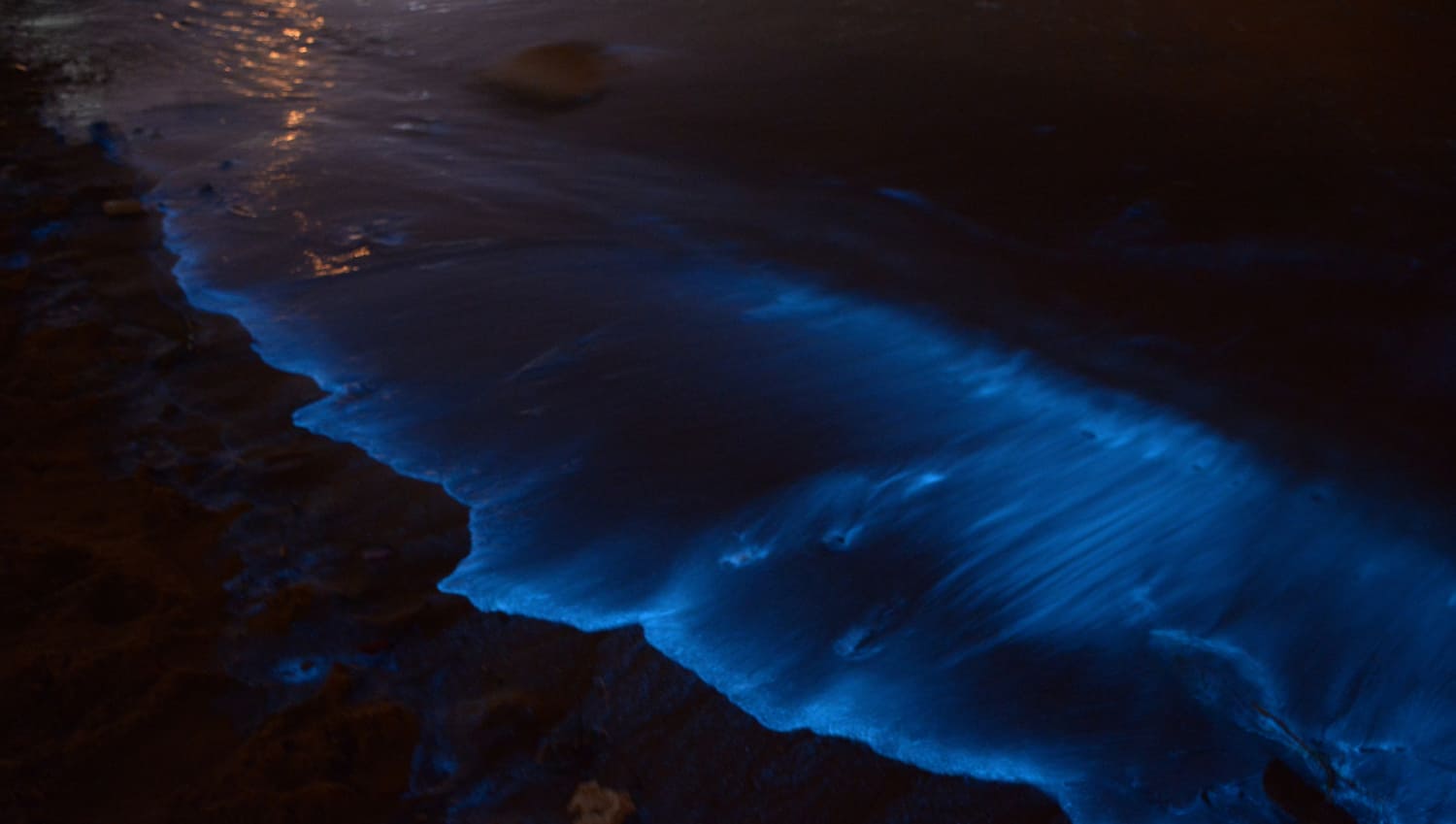
Swimming beneath the Main Arch in complete darkness intensifies this perception. The space stops being a stable reference point and becomes a fragmented sensory experience: blue flashes that appear and disappear, lines of light that follow the body’s movement, a glow that seems to extend beyond the visible.
“The sea speaks to us in many ways, but this is one of the most surprising,” comments Efraín ‘Payín’ Peña, partner and head of guides at Mismaloya Xtreme. “Those of us who work here learned to read it since we were children: when it is calm, when it changes, when it’s best to wait. It’s not just a job; it’s a way of understanding this place.”
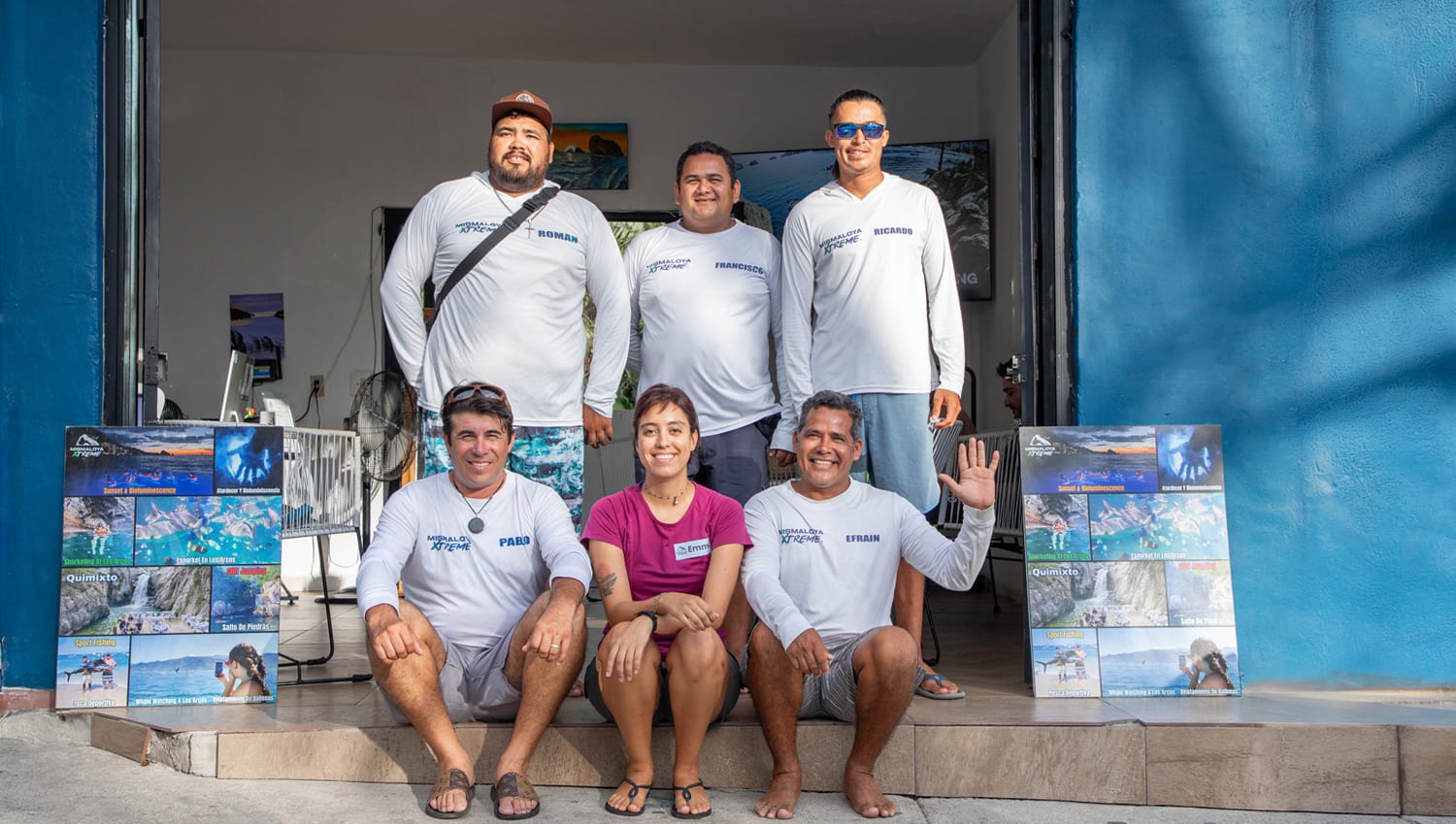
This company came to life in 2025, uniting a group of local residents who had spent years working independently throughout the region. Over time, they decided to structure their knowledge into a formal maritime tour offering. More than a tourism operation, the project reflects a natural continuity with the environment. Each member of the team comes from Mismaloya (or its surroundings) and maintains a direct bond with the sea, which translates into a precise reading of navigation conditions and a constant focus on safety. This familiarity defines not only the operation but also the type of experience offered.
What is observed at Los Arcos de Mismaloya is not merely a natural spectacle; it is also a different way of perceiving the coast. Banderas Bay becomes a stage where the visible and the invisible coexist without clear borders.
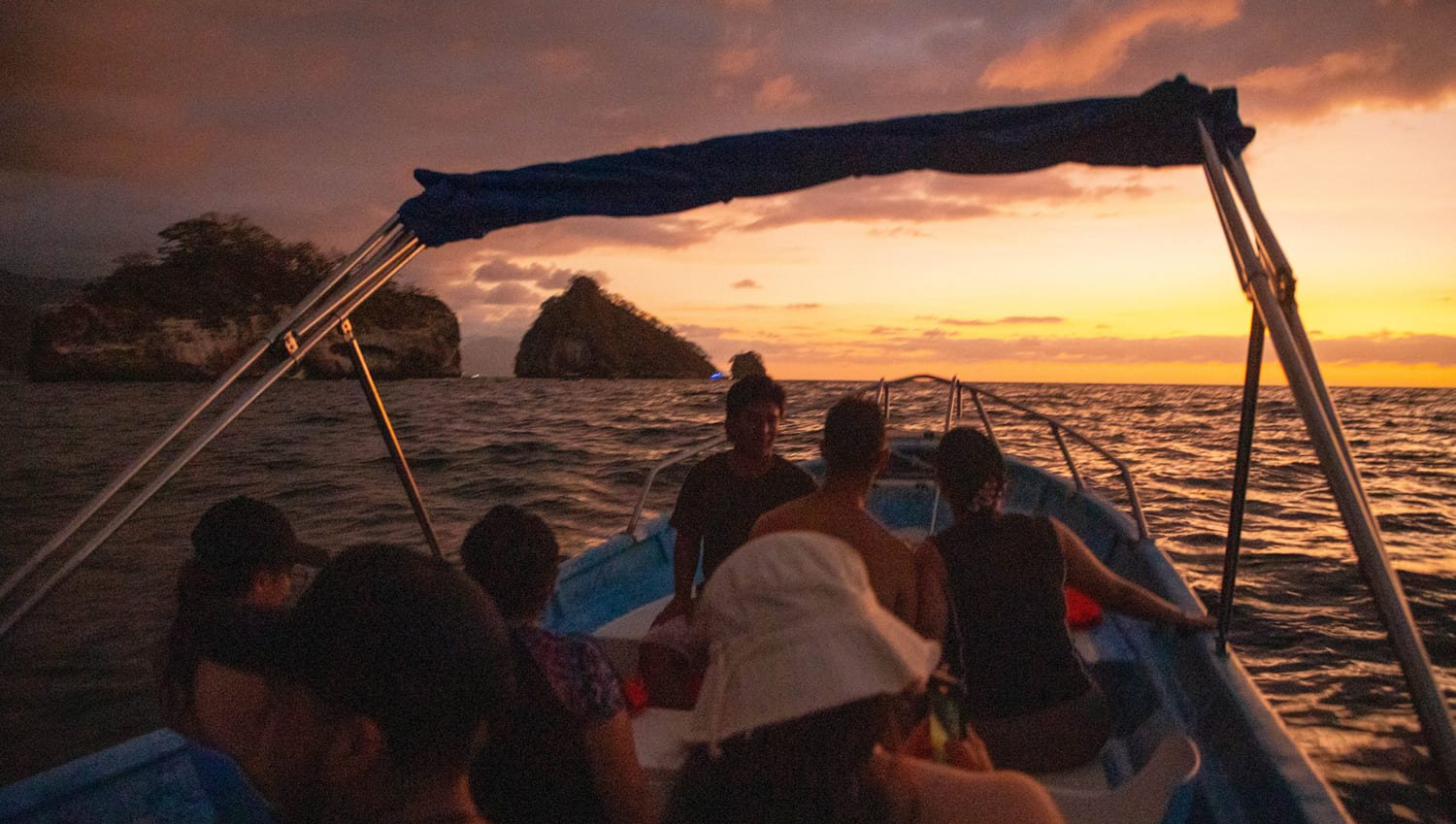
Back on the boat, as the activity in the water begins to wane, silence reoccupies the space. The Main Arch is left behind like a shadow slowly blending into the night. The navigation back to Mismaloya occurs smoothly, but carries a feeling that is hard to name: that of having crossed a territory that does not completely belong to the night nor to the day.
For those wishing to live this experience, Mismaloya Xtreme shares information and reservations on its official website, as well as updates on @mismaloyaxtreme.

Comments