
Wixárika Art in Riviera Nayarit: A Legacy Living through Colors and Symbols
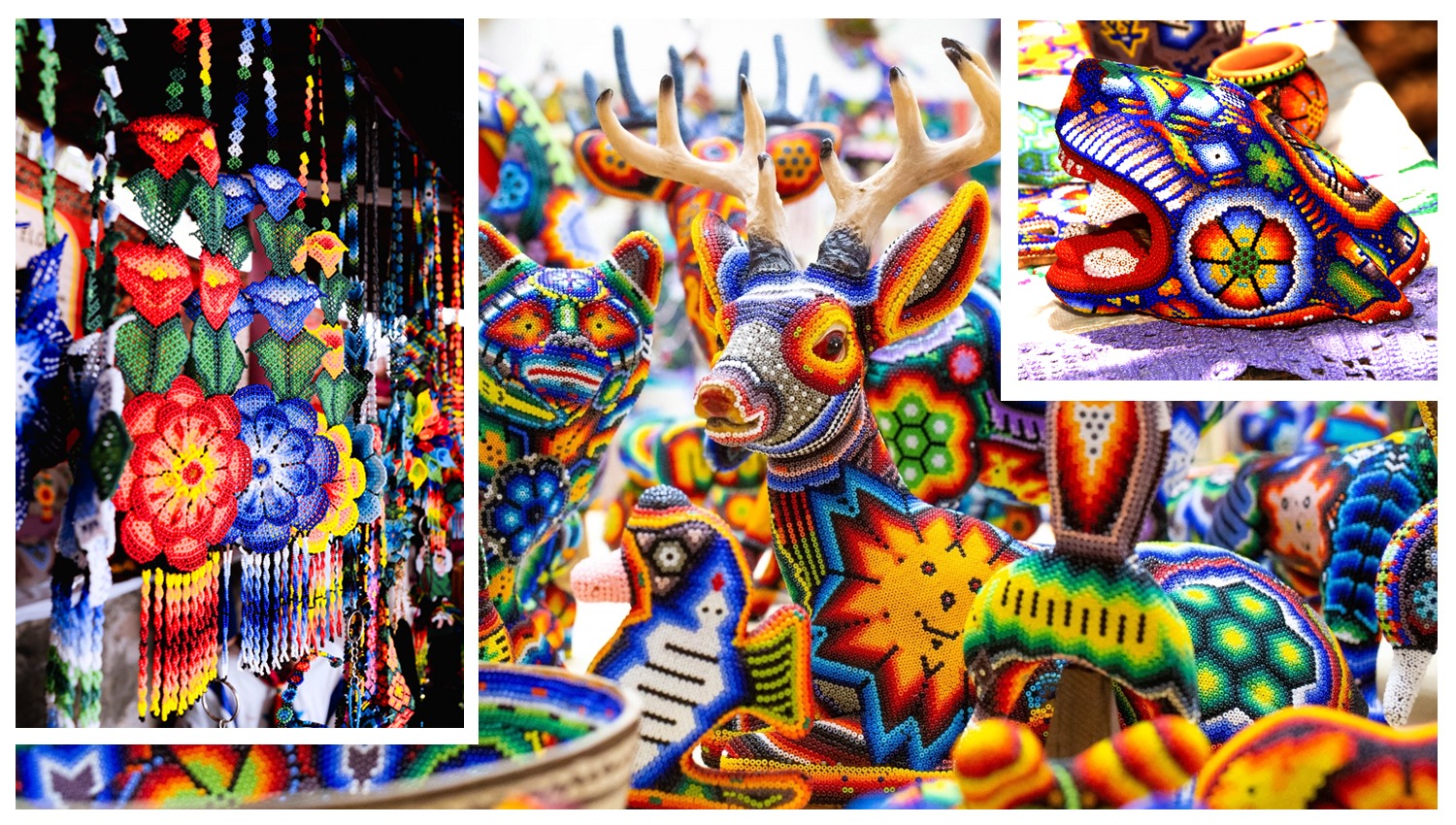
The appeal of Riviera Nayarit is found not only in its beaches, resorts, or natural Pacific settings. It also resides in the cultural expressions that provide this region of Mexico with its identity—specifically in Wixárika art, one of the country’s most fascinating artisanal and spiritual manifestations.
The state of Nayarit safeguards an important part of the Wixárika legacy, an indigenous community inhabiting the Sierra Madre Occidental whose worldview remains alive through symbols, ceremonies, and artisanal pieces loaded with meaning. More than decorative objects, their creations represent a profound connection between humanity, nature, and the universe.
Understanding Wixárika art implies looking beyond the vibrant colors and intricate geometric patterns that characterize their works. Each yarn painting, beaded figure, or ceremonial textile functions as a sacred language transmitting ancestral stories, spiritual teachings, and essential elements of their cultural identity.
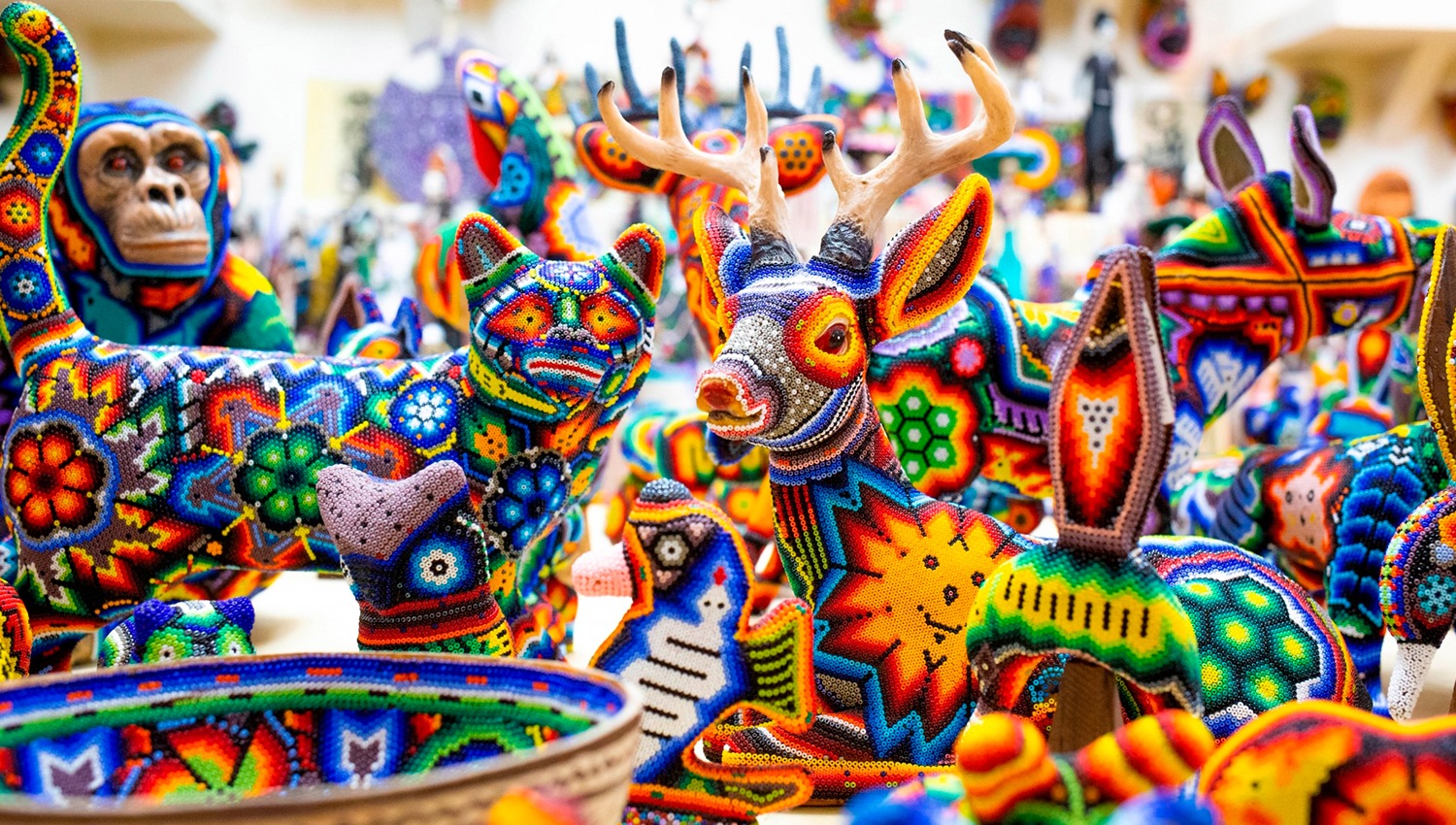
Within this worldview, fundamental symbols constantly appear in their artistic expressions, with each representing spiritual links and narratives preserved for generations.
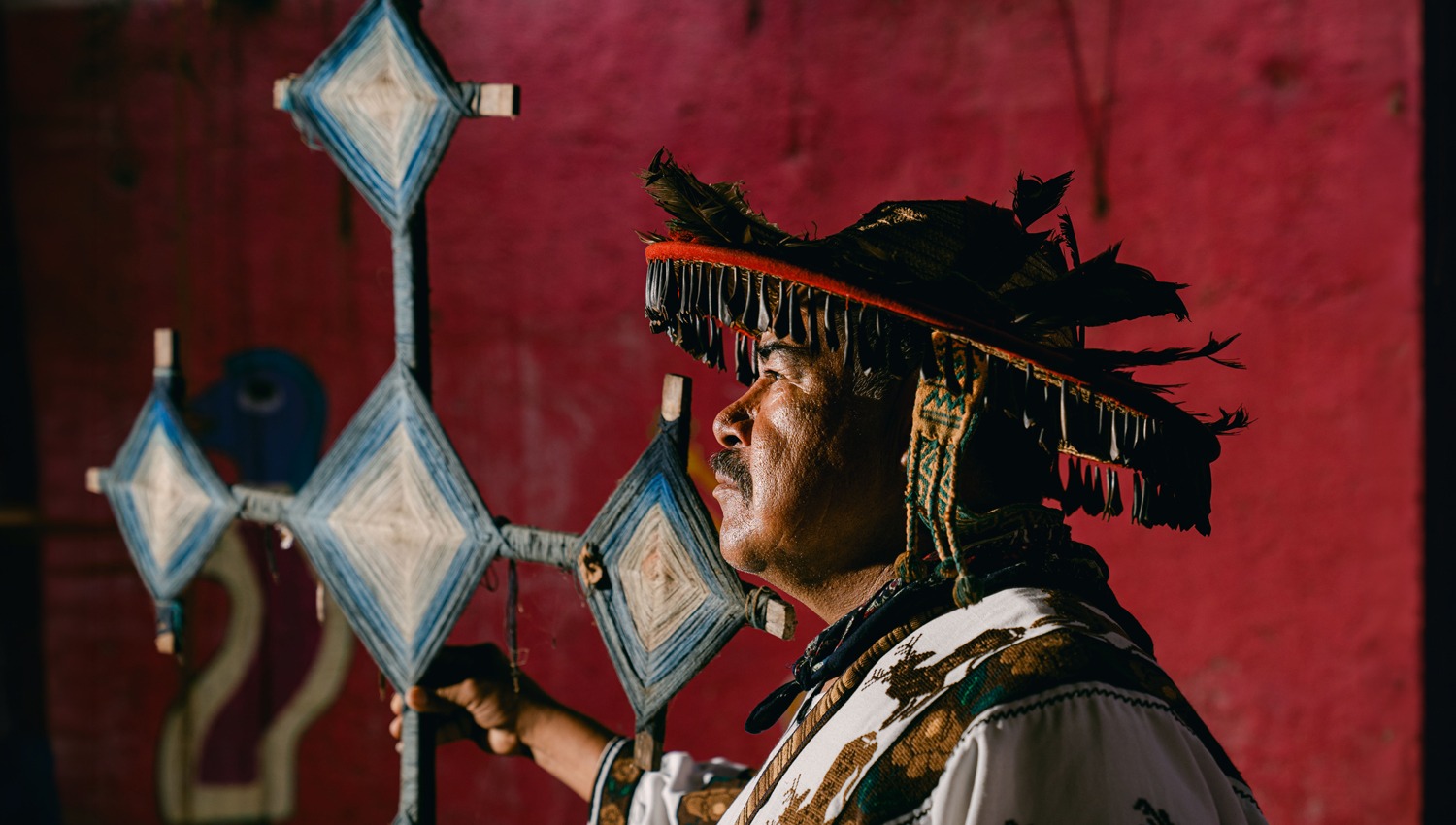
One of the most recognizable emblems is the tsikuri, or “God’s Eye.” Crafted with colored threads woven over small wooden sticks, this diamond-shaped figure symbolizes perception, wisdom, and divine protection. For the Wixárika people, it is a spiritual blessing and a way to express gratitude toward their gods. Its presence is common in both homes and ceremonial spaces, where it functions as a protective element and a connection to the sacred.
Another essential symbol is the deer, known as maxa, considered the guardian of life and a divine messenger. Within Wixárika beliefs, this animal led their ancestors to the discovery of peyote, a central element in their spirituality. Consequently, the deer frequently appears in embroideries and yarn paintings as a representation of abundance, fertility, and spiritual guidance.
Peyote, called hikuri, also holds a central place within this artistic tradition. This spineless cactus symbolizes the search for knowledge and spiritual enlightenment. According to the Wixárika worldview, hikuri allows for direct connection with the gods and is used in ceremonies intended to gain clarity and wisdom. Its representation in art reflects that intimate relationship between the human and the divine.
Added to these symbols are corn, the sun, and fire—inseparable elements of the daily and spiritual life of the Wixárika people. Corn represents sustenance and collective survival; it is the divine gift that sustains existence. Meanwhile, the sun (tayau) and fire (tatewari) are sacred entities associated with energy, protection, and spiritual guidance. The intense and contrasting tones that predominate in many artisanal pieces evoke precisely that vital force related to fire and light.
The richness of Wixárika art also lies in its techniques. Yarn paintings, for example, narrate ceremonial stories and spiritual visions through complex compositions full of symbols. Pieces crafted with beads (chaquira) stand out for their level of detail and artisanal patience, the result of meticulous processes passed down from generation to generation.
In Riviera Nayarit and various points across the state, engaging with this living culture is a possible and deeply enriching experience. The Sierra del Nayar represents the spiritual heart of the Wixárika people, especially in communities like Jesús María, where ancestral traditions and ceremonies remain alive.
In Tepic, the state capital, various markets and cultural spaces offer the opportunity to learn about and acquire pieces crafted by Wixárika artisans, who share the meaning behind each creation. Meanwhile, coastal destinations such as Sayulita and San Pancho have become important showcases for this art through galleries, workshops, and cultural encounters that bring visitors and residents closer to this millennial tradition.
In La Cruz de Huanacaxtle, different markets and local events allow for closer contact with the creators of these pieces, generating accessible spaces to appreciate the cultural and spiritual value they contain.
Today, Wixárika art continues to captivate travelers from all over the world, not only for its visual beauty but for the depth of the stories it safeguards. Each figure, color, and symbol represents an ancestral legacy that remains alive in Nayarit, enriching the cultural identity of Riviera Nayarit and reminding us that, in this region of the Mexican Pacific, tradition and spirituality are an essential part of its essence.

Comments